A fence in Northeast Wisconsin has to deal with more than privacy. Wind, snow, frozen ground, spring moisture, and temperature swings all affect performance.
The best fence for your property depends on exposure, layout, material, post design, and how much maintenance you want.
Wind exposure matters
A solid privacy fence catches wind like a sail. In a protected neighborhood yard, that may not be a major issue. On an open lot, corner lot, field edge, or commercial property, wind load matters a lot.
If your yard is exposed, discuss:
- ✓Post depth.
- ✓Post spacing.
- ✓Fence height.
- ✓Gate placement.
- ✓Panel style.
- ✓Whether a semi-private design would reduce wind load.
Snow piles can damage fences
Snow from plows and snowblowers can push against fences. Heavy wet snow can bend, crack, or loosen sections if it is repeatedly piled against them.
Near driveways, choose layout and materials carefully. Mark fence edges before winter if plows or snowblowers operate nearby.
Chain link in wind and snow
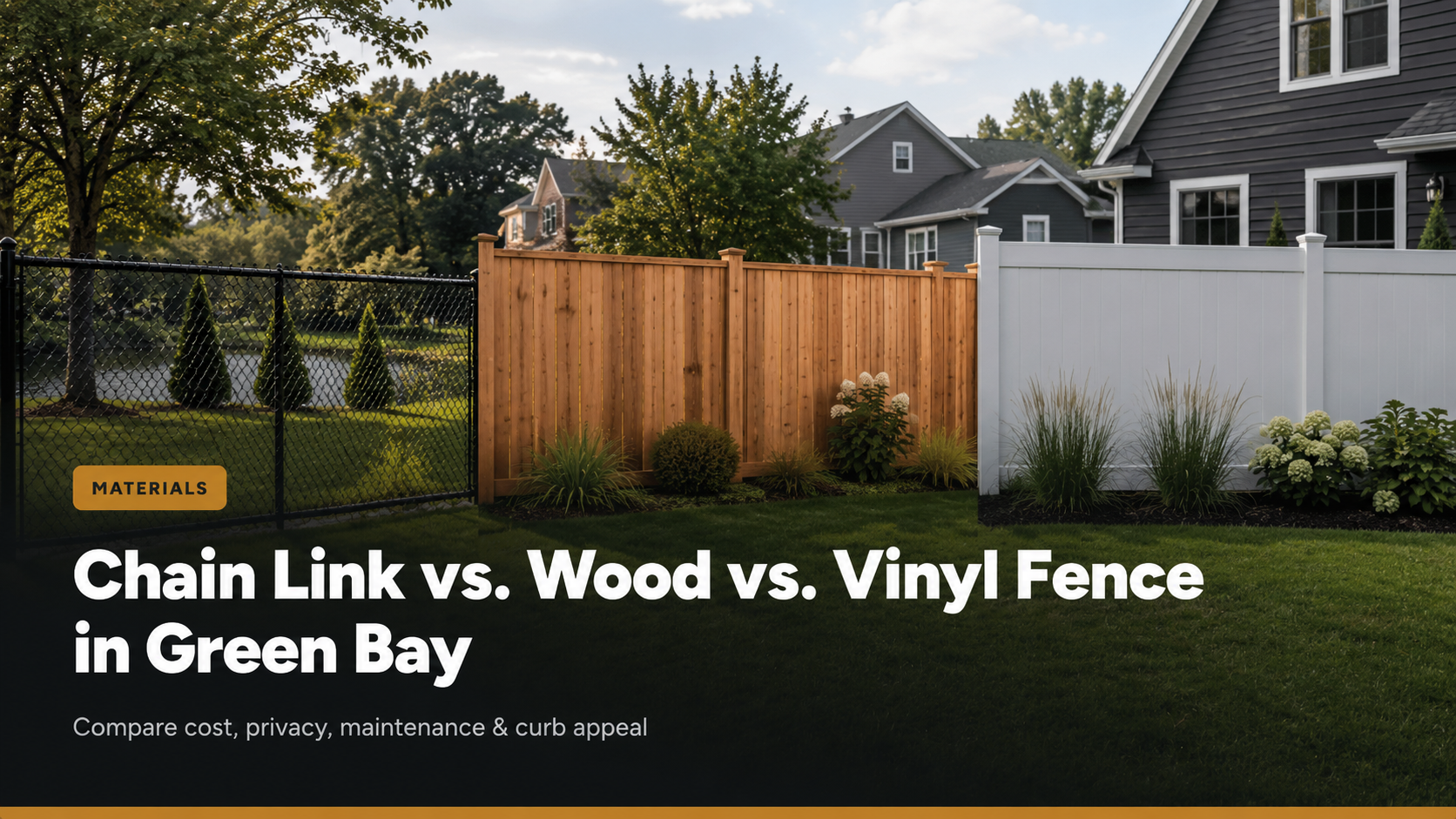
Chain link lets wind pass through, which can make it a practical choice for exposed areas. It also handles snow better than solid panels in many cases because it does not act like a wall.
It is not the best privacy option, but it is strong for boundaries, dogs, and utility areas.
Wood privacy fencing
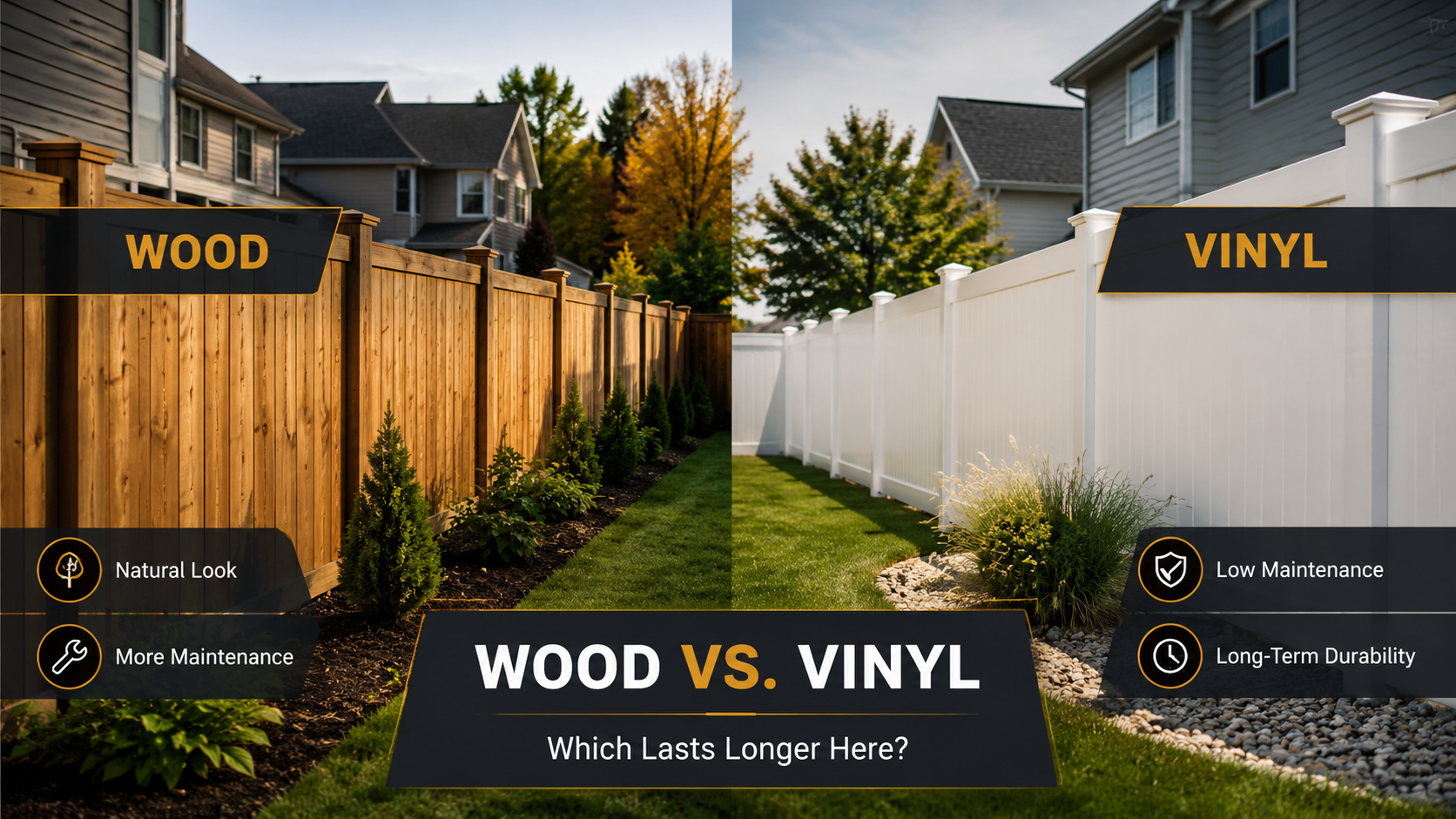
Wood can perform well, but it needs good installation and maintenance. Wind exposure can stress panels and posts. Moisture can affect boards over time.
Choose wood if you want natural privacy and are willing to maintain it. For exposed yards, post design is critical.
Vinyl privacy fencing
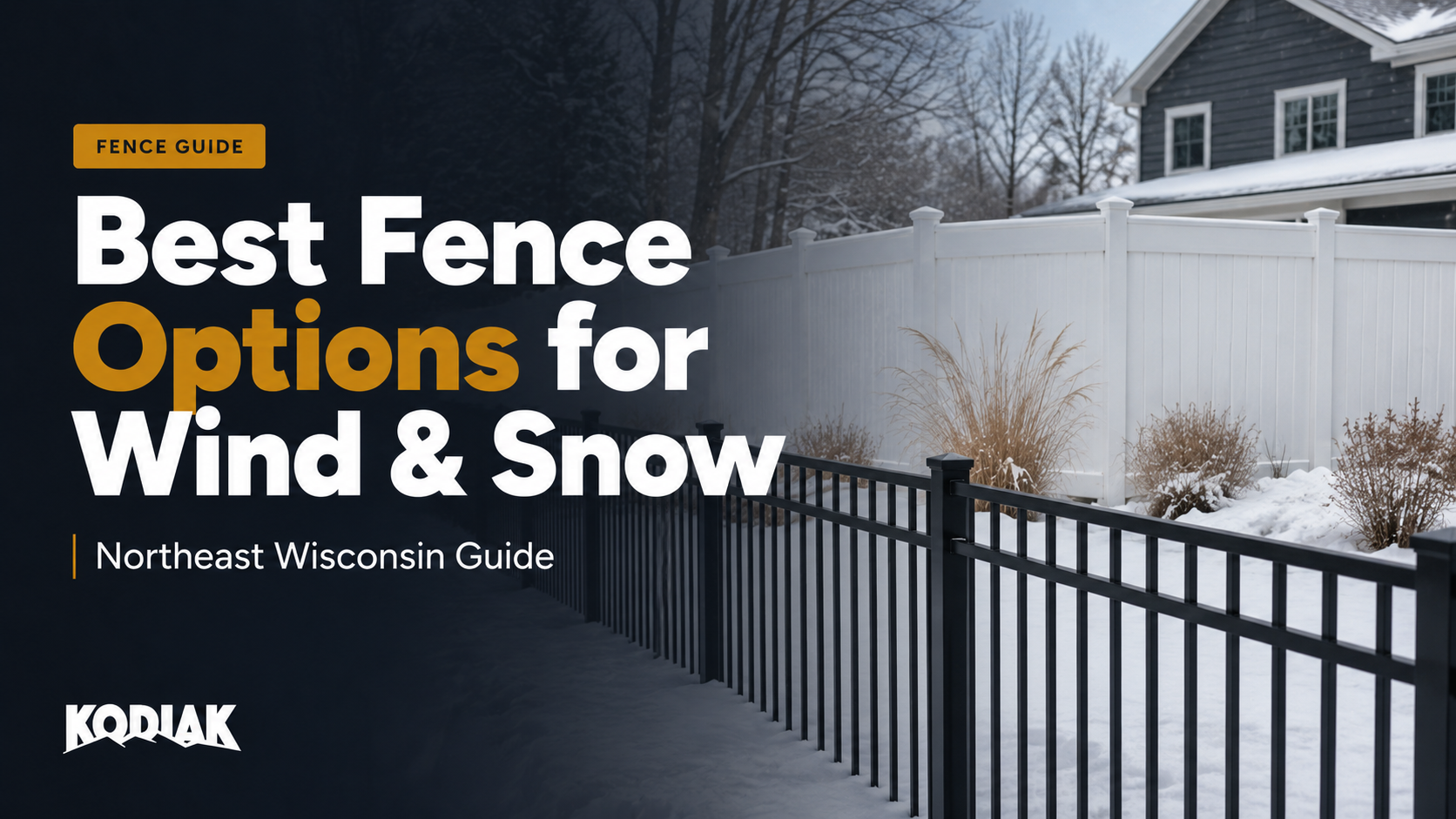
Vinyl is low maintenance and great for clean privacy. Quality matters. A better vinyl system with proper posts and installation will handle weather far better than a cheap, flimsy system.
Avoid piling heavy snow against vinyl panels, especially near driveways.
Aluminum fencing
Aluminum allows wind through and looks clean. It is not a privacy fence, but it can be excellent for decorative boundaries, pools, and open-view areas.
It is a good option when you want a defined yard without creating a solid wind wall.
Semi-private designs
Semi-private fences can be a smart middle ground. They provide screening while allowing some airflow. That can reduce wind pressure compared with a fully solid privacy fence.
They may be a good fit for exposed yards where full privacy is not required.
Installation quality is the real difference
Material matters, but post installation matters more. A high-quality fence installed poorly can still fail. A simpler fence installed correctly can last longer.
In Wisconsin, pay attention to:
- ✓Post depth.
- ✓Gate posts.
- ✓Drainage.
- ✓Soil conditions.
- ✓Corners and ends.
- ✓Hardware quality.
- ✓Snow management.
Bottom line
For exposed properties, chain link, aluminum, or semi-private designs may handle wind better than solid privacy fencing. For privacy, wood or vinyl can both work well when installed properly.
Kodiak Built can help choose a fence that fits your property, not just a catalog picture.
Quick answers
What fence style handles wind best?
Open styles that let wind pass through — chain link and aluminum — along with semi-private designs generally handle wind better than a solid privacy fence, which catches wind like a sail. On exposed Northeast Wisconsin lots, post depth, spacing, and gate placement matter as much as the style.
Can snow piles damage a fence?
Yes. Snow pushed by plows and snowblowers can press against a fence, and heavy wet snow can bend, crack, or loosen sections when it is repeatedly piled against them — so plan the layout carefully near driveways and mark fence edges before winter.
Can I still get privacy on a windy lot?
Yes. Semi-private designs are a smart middle ground because they screen views while allowing some airflow, which reduces wind pressure compared with a fully solid fence. Solid wood or vinyl privacy fencing can also work on exposed sites when post depth, spacing, and gate placement are planned for the wind.