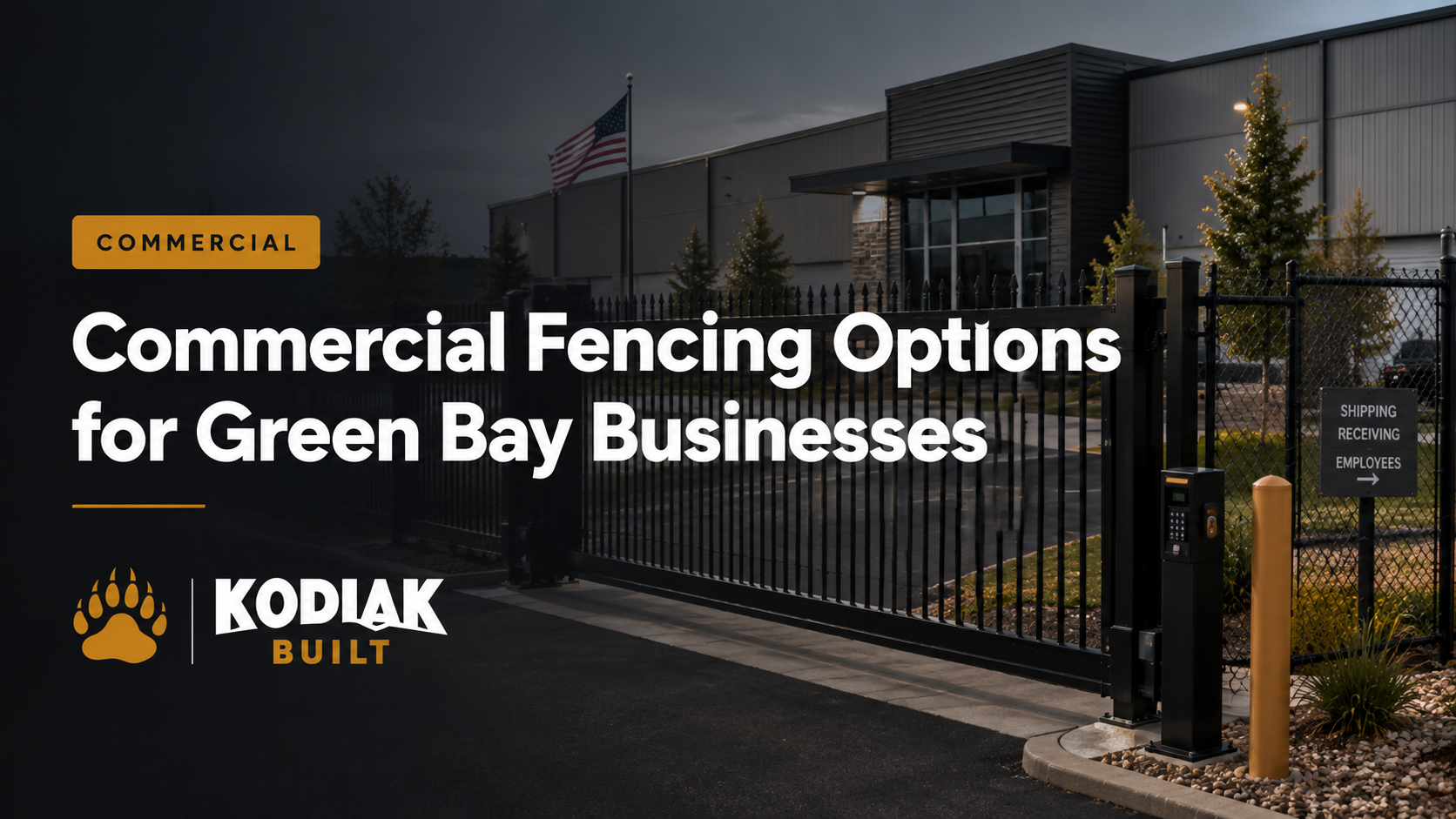
Commercial fencing is about function first. It protects property, controls access, defines boundaries, screens equipment, and helps a site look organized.
For Green Bay businesses, the right commercial fence depends on what you need to protect, how the property is used, and how much visibility or privacy you want.
Common commercial fence goals
Businesses often install fencing for:
- ✓Equipment yards.
- ✓Storage areas.
- ✓Dumpster enclosures.
- ✓Employee or customer safety.
- ✓Access control.
- ✓Property boundaries.
- ✓Loading zones.
- ✓Vehicle areas.
- ✓Privacy screening.
- ✓Theft deterrence.
The best design starts with the business use, not the material.
Chain link fencing
Chain link is one of the most practical commercial fence options. It is durable, cost-effective, and works well for large areas.
Best for
- ✓Equipment yards.
- ✓Storage areas.
- ✓Industrial properties.
- ✓Utility areas.
- ✓Athletic or recreational areas.
- ✓Back-of-building boundaries.
Add-ons
- ✓Privacy slats.
- ✓Barbed wire where allowed.
- ✓Heavier gauge fabric.
- ✓Larger posts.
- ✓Lockable gates.
- ✓Double gates for vehicle access.
Privacy fencing
Some businesses need to screen views rather than simply mark a boundary. Privacy fencing may be used around patios, dumpsters, storage, mechanical equipment, or residential-facing sides of a business.
Material choice depends on appearance, budget, and code requirements.
Gates and access control
Commercial gates need careful planning. Ask:
- ✓Will vehicles enter?
- ✓What width is needed?
- ✓Is a double gate required?
- ✓Will snow removal equipment need access?
- ✓Is the gate locked daily?
- ✓Is future automation possible?
- ✓Are deliveries involved?
A gate that is too narrow or poorly placed can create daily headaches.
Security vs. appearance
Some commercial properties need a fence that looks professional from the street and tougher in the back. A mixed approach can work well: decorative or privacy fencing in visible areas, chain link in utility areas.
Snow removal and maintenance
Commercial sites often have plows, loaders, and heavy snow piles. Fence layout should account for where snow will go. A fence placed in the wrong snow storage area may get damaged every winter.
Permits and local rules
Commercial fencing may require different review than residential fencing. Height, materials, visibility, access, and zoning can all matter. Confirm rules before building.
Bottom line
A commercial fence should make the property safer, cleaner, and easier to manage. Kodiak Built can help Green Bay businesses plan fencing for security, access, screening, and long-term durability.
Quick answers
What is the most practical fence for a commercial property?
Chain link is one of the most practical commercial options — durable, cost-effective, and well suited to large areas like equipment yards, storage areas, and utility zones. Add-ons such as privacy slats, heavier-gauge fabric, larger posts, and lockable gates can adapt it to the site.
Can a business mix fence types on one property?
Yes, and it often works well. A common approach is decorative or privacy fencing on visible, street-facing areas that need to look professional, with chain link in utility and back-of-building areas.
Do commercial fences follow the same rules as residential fences?
Not necessarily. Commercial fencing may require different review than residential fencing — height, materials, visibility, access, and zoning can all matter — so confirm the rules before building.