Every May, the same thing happens: the sun comes out, half of Green Bay looks at the backyard at the same moment, and the fence season stampede begins. Quotes stack up, permit desks get busy, and the calendar fills for weeks.
Meanwhile, September sits there — workable ground, comfortable weather, open calendar — being criminally underrated. If you're fence-curious right now, in the back half of summer, this post is your sign.
The May problem
Spring demand is real and it compounds: everyone's project needs the same crews, the same materials, and the same permit desks in the same six weeks. None of that makes spring bad — it makes spring crowded, and crowded means waiting.
What September has going for it
- ✓Workable ground — no lingering frost, no spring saturation.
- ✓Cooler weather that's easier on crews, concrete, and landscaping.
- ✓Shorter lead times — the waiting list thinned out after midsummer.
- ✓Calmer permit review than the spring pile-up.
- ✓A fence that's finished before winter instead of scheduled after it.
Ground, concrete, and the freeze clock
Fence season doesn't end on a date — it ends when the ground freezes. Fall installs work backward from that: posts dug, set in concrete below the frost line, and cured while conditions are still friendly. Book in late summer or early fall and there's runway to spare; wait until November and you're gambling on the year's weather. The step-by-step timeline is the same as spring — it just runs with less traffic.
The spring-ready payoff
Winter is the proving ground
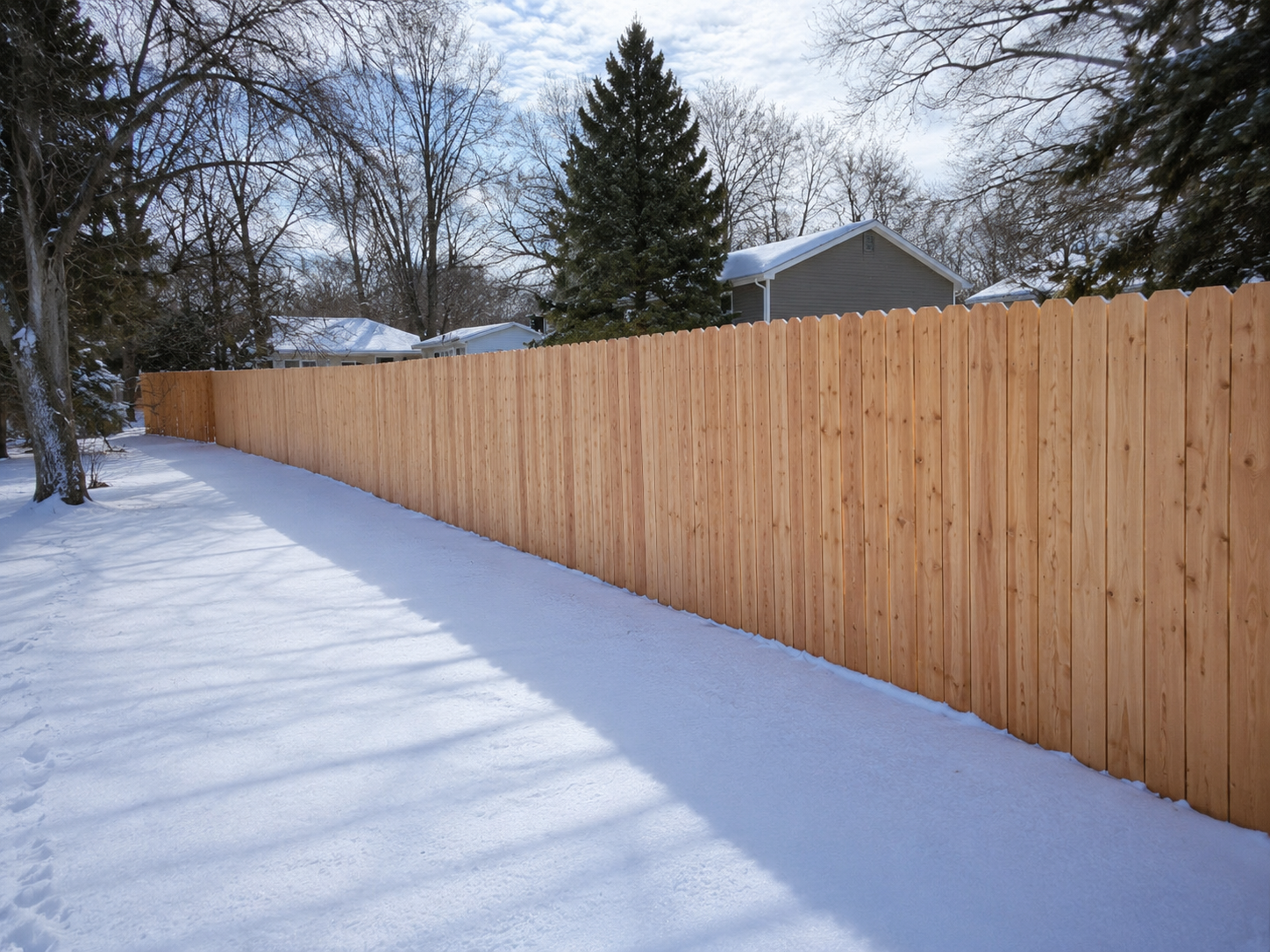
A fall-built fence spends its first months in the exact conditions Wisconsin fences are built to survive — on our posts, that first winter is simply the warranty period doing its job. Come thaw, you'll know it was built right, and winter damage season will be something that happens to other people's fences.
Spring starts enclosed
The quiet luxury: when the first nice weekend hits, your yard is already done. Dog contained, pool line ready, landscaping plans free to work around a finished fence instead of a scheduled one — while the neighbors join the May queue.
Want a fall build? Start the conversation in late summer. Quote, permit, materials, and a September or October slot line up comfortably — the freeze clock only squeezes the people who call in November.
Is spring ever the better call?
Sure — if the project depends on spring grading, a pool dig, or other work that has to come first, sequence honestly. Our guide to the best time to install a fence walks the whole calendar. But “I just assumed you're supposed to wait for spring” isn't a reason; it's a habit.
Bottom line
Same fence, same standard, shorter wait, and a head start on next summer. Fall isn't the consolation season for Wisconsin fences — for most projects it's the smart one.
Beat the spring rush by six months: get your free written quote now and pick your September slot.
Quick answers
Is fall a good time to install a fence in Wisconsin?
One of the best. The ground is workable, the weather is kind to crews and concrete, and the spring waiting list hasn't formed yet — so projects move from quote to build noticeably faster.
How late in the year can a fence be installed?
Generally until the ground freezes, which varies year to year. The deeper into fall you book, the tighter the weather windows get — another argument for starting the conversation in late summer.
Is fall fence installation cheaper?
The honest answer: the win is scheduling and lead time, not a discount. You get faster starts, calmer permit desks, and material availability — the price of a well-built fence is the price of a well-built fence.