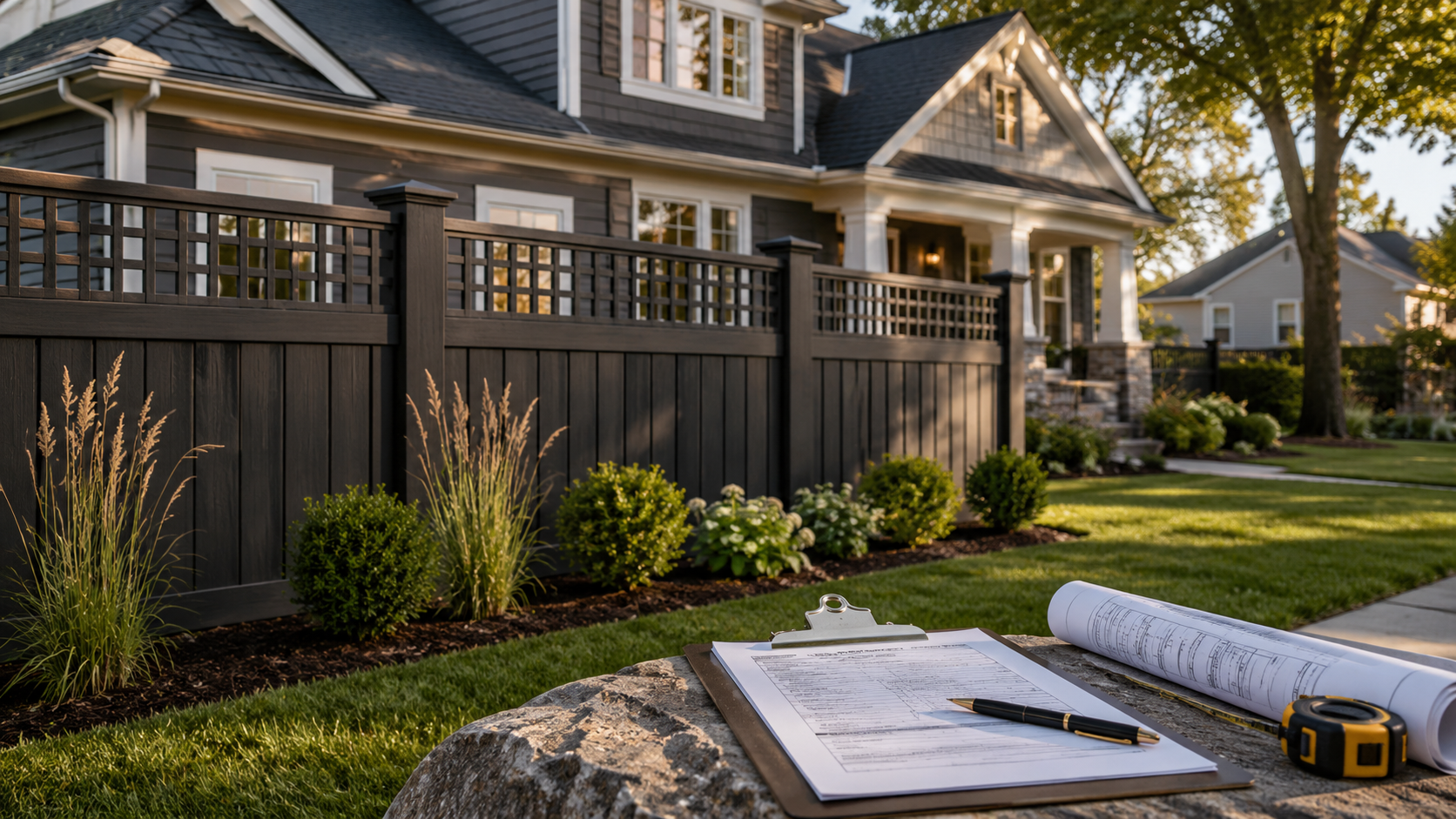
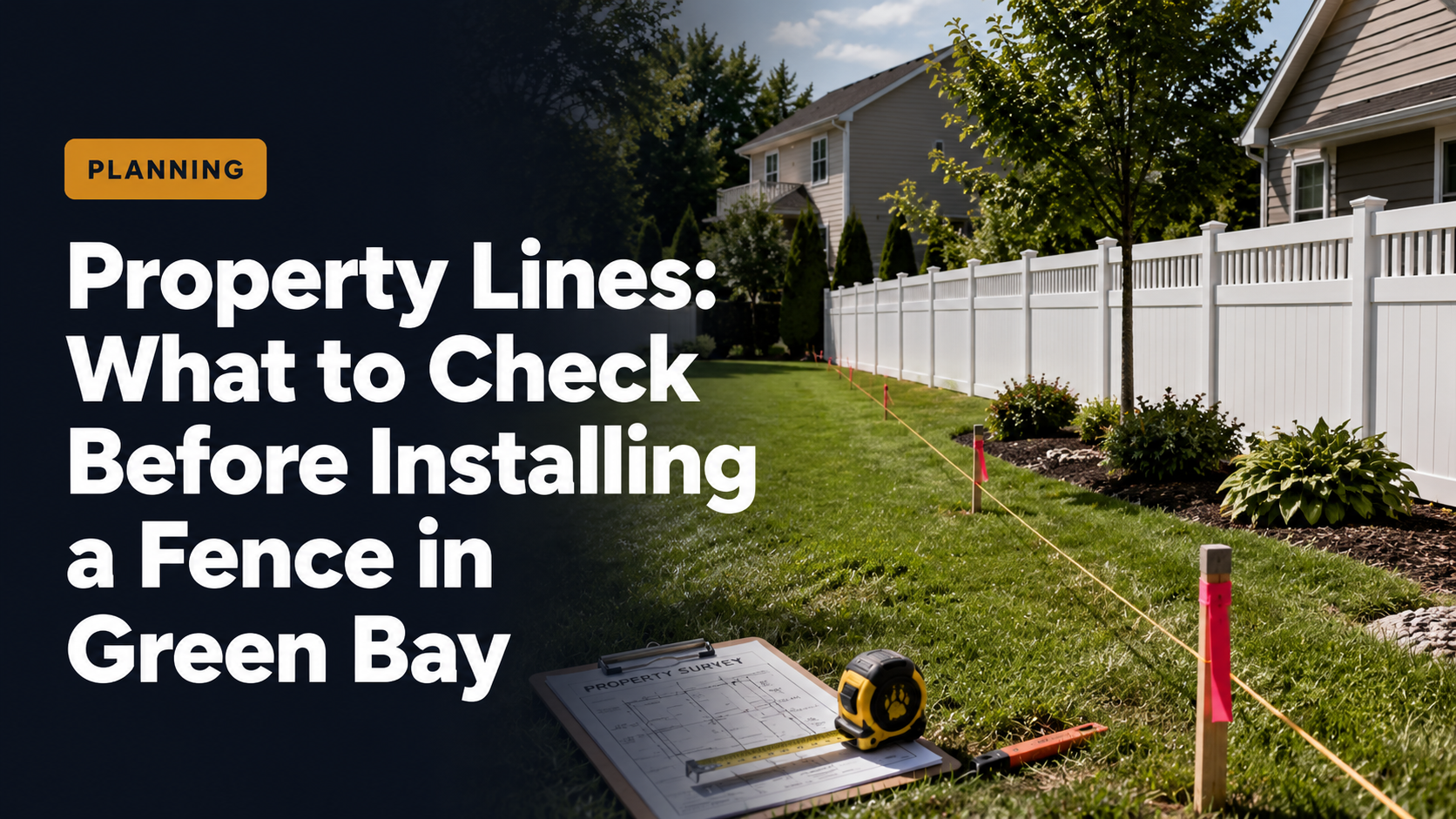
A fence is one of the most visible improvements you can make to a property. That is why property lines matter. A fence installed even a little too far onto a neighbor’s property, easement, or restricted area can create stress, cost, and rework.
Before you install a fence in Green Bay or the surrounding communities, take time to confirm where the fence should go.
Local note: Fence rules, permit fees, HOA rules, utility-locate requirements, and product availability can change. Always confirm current requirements with the City of Green Bay, your municipality, your HOA, and Diggers Hotline before starting work.
A permit does not prove the property line
This is one of the most important things homeowners should understand: a fence permit is not the same as a survey.
A city may review your fence application, but that does not necessarily mean the city has verified your exact property boundaries. Property owners are generally responsible for knowing where their property lines are.
If you are unsure, do not guess.
Start with documents you already have
Look for:
- ✓Plat of survey.
- ✓Closing documents.
- ✓Subdivision plat.
- ✓Site plan from a previous project.
- ✓Mortgage or title paperwork.
- ✓HOA documents.
- ✓Existing property pins.
A survey is the best tool, but even older documents can help you understand what questions to ask.
Find the property pins if possible
Many lots have metal pins or stakes marking corners. They may be buried, covered by landscaping, or hard to find without equipment. Do not move or rely on random stakes unless you know what they are.
If pins cannot be found, or if the line is disputed, hiring a surveyor may be the safest move.
Easements can affect fence placement
Even if land is part of your property, an easement may limit what can be built there. Easements can exist for utilities, drainage, access, or municipal purposes.
A fence built in an easement may be allowed in some cases, but it can also be subject to removal if access is needed. Always review easements before finalizing the layout.
Utility boxes and buried lines
Fence lines often run near utility boxes, meters, and buried lines. Before digging, utilities should be located through Diggers Hotline / 811. Public utilities can be marked, but private lines may not be included.
Private lines can include:
- ✓Sprinkler systems.
- ✓Invisible dog fence wires.
- ✓Electric lines to detached garages.
- ✓Private lighting.
- ✓Drain lines.
- ✓Gas lines after the meter.
Tell your contractor about anything you know is buried in the yard.
Talk to neighbors early
You do not always need a neighbor’s permission to build on your property, but a quick conversation can prevent problems. It is especially useful when:
- ✓The fence replaces an existing shared fence.
- ✓The line is close to landscaping.
- ✓The neighbor has pets.
- ✓The fence affects snow storage or drainage.
- ✓Access may be needed from their side.
- ✓The property line is unclear.
A short conversation before installation is better than a complaint after.
Which side should face out?
Many communities and HOAs have expectations about the finished side of a fence facing outward. Even when not required, it can affect neighbor relations and curb appeal.
Ask about this before selecting a fence style. Some fence systems look good from both sides, while others clearly have a finished and unfinished side.
Corner lots and visibility
If your property is on a corner, the fence layout may be limited by visibility requirements. A tall solid fence near a street corner or driveway can create safety concerns. Local rules may restrict height or location in those areas.
Do not assume backyard rules apply to every part of a corner lot.
What if there is already a fence?
An existing fence does not always prove the property line. Old fences are sometimes built inside the line, outside the line, or based on a neighbor agreement that was never formalized.
Before replacing an existing fence, ask:
- ✓Was the old fence installed correctly?
- ✓Is it on the property line or inside it?
- ✓Does it cross any easements?
- ✓Does the neighbor believe it is shared?
- ✓Are there encroachments nearby?
Replacement is a good time to correct old layout issues.
Bottom line
A fence should give you privacy, safety, and a better yard—not a property dispute. Before installation, confirm the property line, check easements, locate utilities, review local rules, and communicate with neighbors when appropriate.
Kodiak Built can help plan the fence layout, but boundary certainty starts with the homeowner’s property information and, when needed, a professional survey.
Quick answers
Does a fence permit prove where my property line is?
No. A permit is not the same as a survey — a city may review a fence application without verifying the exact property boundaries. Property owners are generally responsible for knowing where their property lines are.
How do I find my property line before building a fence?
Start with documents you already have, such as a plat of survey, closing paperwork, a subdivision plat, or HOA documents, and look for the metal pins that mark many lot corners. If the pins cannot be found or the line is disputed, hiring a surveyor may be the safest move.
What happens if a fence is built over the property line?
A fence installed even a little too far onto a neighbor's property, easement, or restricted area can create stress, cost, and rework, and a fence in an easement can be subject to removal if access is needed. An existing old fence is not proof of the line either — some were built inside or outside it.