Fence conversations obsess over height, but ask anyone who's chased a dog down the block in a bathrobe: most escapes go under, not over. A determined digger can defeat an expensive fence with twenty minutes and a good reason. The good news: the under-the-fence problem is more fixable than almost any other containment issue, because the solutions are physical, proven, and mostly invisible once installed.
We covered dog-fence planning broadly in our dog fence guide. This post is entirely about the bottom twelve inches — why dogs dig at the line, and the ladder of fixes from lightest to heaviest.
Why dogs dig at the fence line
Three motives cover almost every digger. Boredom: digging is entertainment, and the fence line is where the interesting smells concentrate. Prey drive: rabbits, moles, and chipmunks run the fence line like a highway, and your dog has noticed. Escape: something out there — a dog friend, a jogging route, an intact romance — is worth tunneling for.
The motive matters because hardware holds the line while you address the reason. A bored dog with a reinforced fence becomes a bored dog with a new hobby, and you'd like a say in what the hobby is. As a rule, escape-driven diggers earn the heavy hardware; bored ones usually reform with the light rungs of the ladder plus a fuller schedule.
The fixes, lightest to heaviest
1. Tighten the bottom clearance
A generous gap under the fence is an invitation with the door already ajar. The first fix is the fence itself: tight, consistent ground clearance for the whole run — a design and installation decision, made panel by panel across every dip in the yard.
2. Bottom tension wire
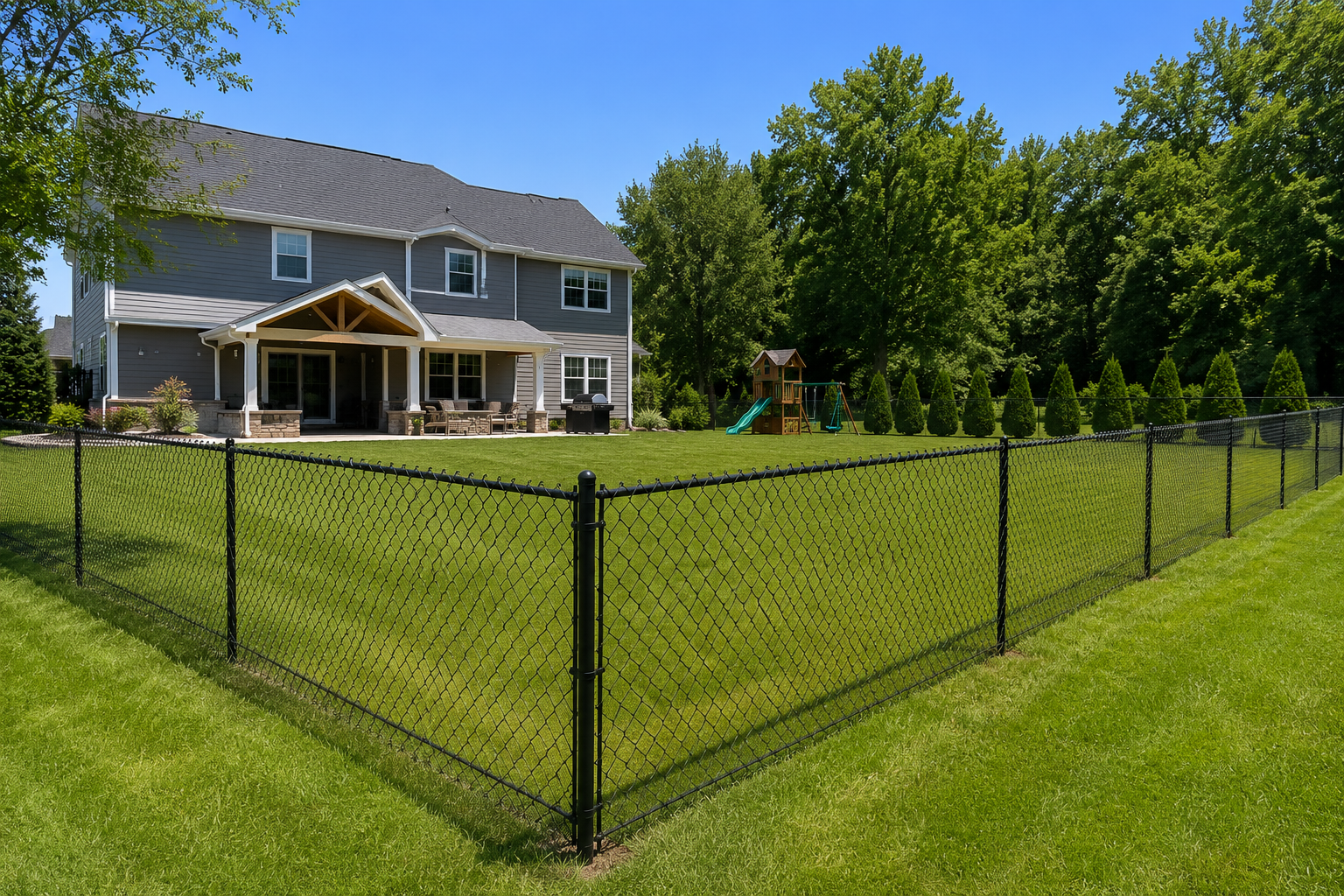
On chain link, a heavy wire stretched taut along the bottom edge stiffens the mesh so it can't be nosed up and wriggled under — a standard add-on that solves the push-under problem before digging even starts. It's cheap insurance at build time and a routine retrofit on an existing fence.
3. Dig guards
The purpose-built answer: a barrier fastened to the fence bottom that continues into the ground, or bends outward in an L across it just under the surface. The dog commits to the dig, hits metal a few inches down, and files the project under not-worth-it. Buried skirts disappear entirely under the turf.
4. Stone or pavers along the line
A course of stone, pavers, or rock along the fence line replaces the soft, diggable dirt that makes the line attractive in the first place. It deters most casual diggers, doubles as a mow strip, and looks tidy doing it. Truly determined dogs may start their tunnel a foot farther out — which is when the guard above earns its keep. Flagstone and larger pavers beat pea gravel here — small stone scatters under enthusiastic paws, while big flat pieces just sit there being discouraging.
5. The buried barrier
For the career escape artist: wire mesh buried vertically below the fence line. It's the most work and the most disruption, and it's the option that ends the argument. Most dogs never need it. The ones that do, need exactly it.
Different fences, different bottoms
The right rung of the ladder depends on what the fence is. Chain link's mesh is flexible at the bottom edge, which is why tension wire exists and why it pairs so naturally with dig guards. Wood and vinyl privacy fences have rigid bottom rails, so the game there is clearance and ground treatment — keeping the gap tight and the dirt under it unrewarding. Solid fences also hide the squirrels, joggers, and rival dogs that motivate half the digging in the first place, a quiet advantage no add-on can match.
Gate bottoms: the favorite exit
Gates need swing clearance, which means every gate has a built-in gap — and dogs audit gates first. A hard threshold under the swing — concrete, pavers, a set stone — fixes the soft-dirt problem exactly where the clearance can't be closed, and keeps spring mud from deepening the gap for you. Check the latch side too — a gate that flexes leaves a corner gap a lean dog can pry, so gates on digger duty deserve solid posts and hardware that pulls the frame tight.
Low spots and slopes
Yards dip, and every dip under a fence is a head start. Low spots can be filled and armored with stone; on real grades, the fence design itself decides the bottom line — racked fencing follows the ground tightly, while stepped panels leave triangles, a trade we cover in our slope guide.
The behavior side, briefly
Hardware wins the fence line; habits win the dog. Tired dogs dig dramatically less, supervision in the first weeks catches the hobby before it ever pays off, and a legal dig zone — a sand pit where digging is allowed — gives the shovel-brained breeds somewhere to file the urge. None of it replaces the hardware — it just stops manufacturing new reasons to dig.
What doesn't work
- ✓Scolding after the escape — the dig paid off twenty minutes ago; the lesson doesn't connect.
- ✓Refilling the tunnel with loose dirt and hoping — see the tip below.
- ✓Assuming age will fix it — digging is self-rewarding, and habits that work don't retire.
- ✓Adding height — a dog going under is unimpressed by a taller top.
Dogs reoffend at the same spot. When you fill in a tunnel, cap it with stone or a dig guard rather than just dirt — refilled soil is looser than whatever the dog dug through the first time, and every dog knows it.
Bottom line
Digging is the most solvable escape there is: tight clearance, a stiff bottom edge, a guard where it's earned, stone where it's smart, and a hard threshold at the gate. Build the bottom of the fence like it matters — because to your dog, it's the whole fence. And if you're designing a new fence around a known excavator, say so up front: the bottom edge is far cheaper to build right than to retrofit.
Got a digger? Tell us about the dog and we'll spec the bottom of the fence to match.
Quick answers
Why do dogs dig under fences?
Three motives cover most diggers: boredom, prey drive chasing rabbits and moles along the line, and escape toward something interesting on the other side. The fix holds better when it's matched to the motive.
What is a dig guard?
A barrier fastened to the bottom of the fence that continues down into the ground, or bends outward in an L just under the surface — so a digging dog hits metal a few inches down instead of open dirt, and gives up.
Do rocks along the fence line stop digging?
A course of stone or pavers along the line deters most casual diggers, because the digging spot stops being soft dirt. Determined dogs may start their tunnel farther out, which is when a dig guard or buried barrier earns its keep.