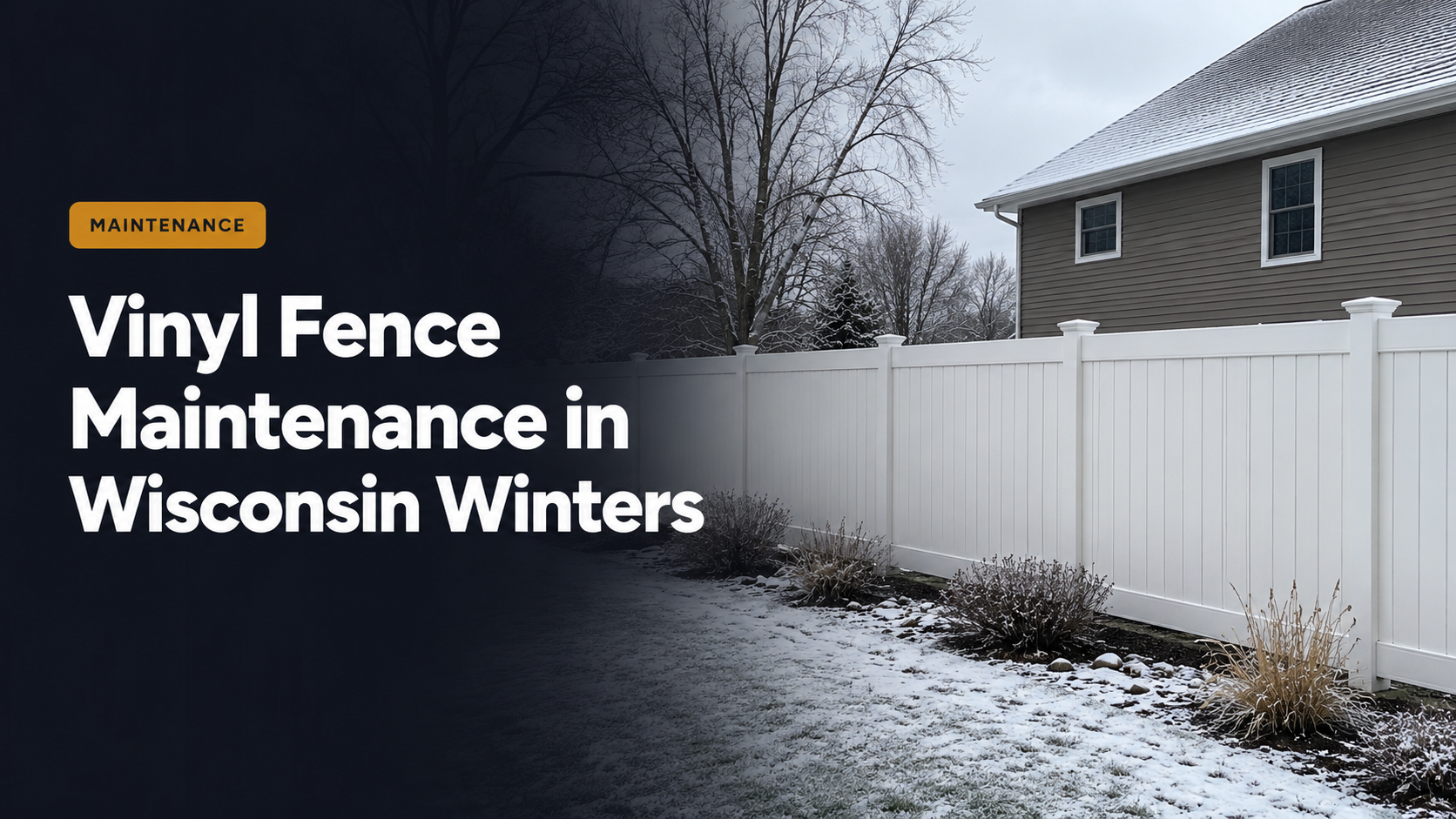
Vinyl fencing is popular because it is low maintenance, but low maintenance does not mean no maintenance. Wisconsin winters can be rough on any outdoor material. Snow, ice, wind, and freeze-thaw cycles can all affect how a fence looks and performs.
The good news: a quality vinyl fence is easy to care for when you know what to avoid.
Do not pile heavy snow against the fence
Snow is one of the biggest winter issues. Light snow is not usually a problem, but heavy piles from plows, snowblowers, or roof slides can push against panels and posts.
Avoid using the fence as a snow storage wall. If snow must be moved near the fence, keep the force away from panels and gates.
Be careful with snowblowers
Frozen chunks of snow, gravel, or ice thrown from a snowblower can crack or damage vinyl. This is especially important near driveways, sidewalks, and gates.
When clearing snow:
- ✓Aim discharge away from the fence.
- ✓Avoid throwing ice chunks at panels.
- ✓Keep augers and shovels away from the base.
- ✓Mark fence edges near driveways before snow covers them.
Watch gates after freeze-thaw cycles
Gates are moving parts. They can be affected by frost movement, snow buildup, and shifting ground. If a gate starts rubbing in winter, do not force it aggressively. Forcing a frozen or misaligned gate can damage hinges, latches, or posts.
Instead:
- ✓Clear snow and ice around the gate.
- ✓Check the latch area.
- ✓Look for frost heave or ground buildup.
- ✓Wait for thaw if the issue is temporary.
- ✓Schedule adjustment if it continues.
Clean gently in spring
After winter, vinyl fences may show dirt, road salt, organic debris, or mildew. Most cleaning can be done with mild soap, water, and a soft brush or cloth.
Avoid harsh abrasives that can scratch the surface. For stubborn spots, use products recommended for vinyl and test in a small area first.
Inspect after storms
After a heavy windstorm or major snow event, walk the fence line and look for:
- ✓Loose caps.
- ✓Shifted panels.
- ✓Gate alignment issues.
- ✓Cracks from impact.
- ✓Posts that feel loose.
- ✓Areas where snow or ice pushed against the fence.
Catching small issues early is easier than waiting until they become bigger repairs.
Trim branches before winter
Branches that hang over a fence can become dangerous when loaded with snow or ice. A falling limb can damage panels, rails, or posts.
Before winter, trim back branches that could fall onto the fence line.
Keep drainage in mind
Water that collects around posts can contribute to freeze-thaw movement. If you notice recurring ice or puddles along the fence line, drainage may be part of the problem.
Good installation and grading help, but homeowners should also avoid directing sump pump discharge, downspouts, or runoff toward the fence when possible.
Why installation still matters
Maintenance helps, but a vinyl fence performs best when it is installed correctly from the start. Post depth, alignment, material quality, gate hardware, and layout all affect winter performance.
A cheap vinyl fence with shallow posts can still move. A quality vinyl fence installed well is much more likely to stay straight and clean.
Bottom line
Vinyl is a strong low-maintenance fence option for Wisconsin, but it still deserves basic winter care. Do not pile heavy snow against it, protect it from snowblower impact, keep gates clear, inspect after storms, and clean it gently in spring.
Kodiak Built can help install and maintain vinyl fencing built for Green Bay weather.
Quick answers
Can I pile snow against a vinyl fence?
Avoid it. Light snow is not usually a problem, but heavy piles from plows, snowblowers, or roof slides can push against panels and posts, so do not use the fence as a snow storage wall.
What should I do if my vinyl gate sticks or rubs in winter?
Do not force it — forcing a frozen or misaligned gate can damage hinges, latches, or posts. Clear snow and ice around the gate, check the latch area, look for frost heave or ground buildup, and wait for thaw if the issue is temporary; if it continues, the gate needs an adjustment.
How do I clean a vinyl fence after winter?
Most winter dirt, road salt, and mildew comes off with mild soap, water, and a soft brush or cloth. Avoid harsh abrasives that can scratch the surface, and test vinyl-safe products in a small area first for stubborn spots.